Why Is My Manual Gearbox Whining?
Manual gearbox whine: possible causes and checks
A manual gearbox can make a low hum, a high pitched whine or a rough rumbling sound. Drivers often call all of these “gearbox noise”, although the source may be inside the transmission, in the clutch or elsewhere in the driveline. If you are looking for manual gearbox repair in Antalya, a clear account of when the noise occurs is more useful than guessing which bearing needs replacement. A sound pattern provides clues; it does not establish a diagnosis on its own.
Start with the conditions, not the suspected part
Make a note of whether the sound appears on a cold start or after the car has warmed up. Does it become louder as road speed rises? Does it change when you accelerate, ease off the throttle or use engine braking? Is it present in every gear or mainly in one? Even the road surface can affect what you hear inside the cabin. Record observations during normal, safe driving only. Avoid trying to reproduce a fault with abrupt manoeuvres or by taking a car with severe symptoms onto a busy road.
Road speed and engine speed are different clues
A noise that follows road speed may prompt checks of the final drive, wheel bearings, tyres and other rotating components. A sound that follows engine speed may involve the engine or clutch side as well. If the noise changes at the same road speed when a different gear is selected, the load path through the manual transmission may be relevant. These are starting points for an inspection, not rules that identify a particular shaft or bearing.
What happens when the clutch pedal moves?
At a standstill, a sound in neutral that changes when the clutch pedal is pressed can help a technician separate possible input shaft and clutch related causes. A noise that first appears as the pedal is pressed may also involve the clutch release mechanism. ZF’s workshop guidance notes that clutch noises have several possible sources and that the exact point in the pedal movement matters. The pedal response alone cannot prove that the gearbox needs dismantling.
Possible causes within a manual gearbox
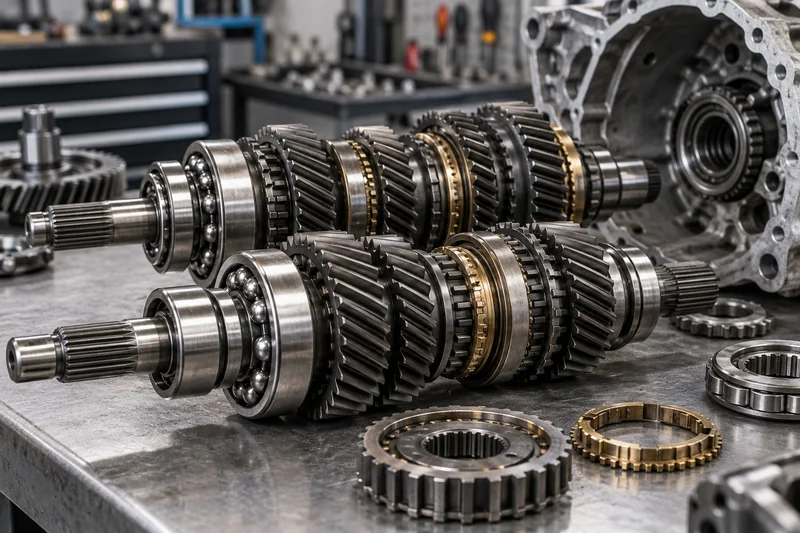
Bearings support rotating shafts. Wear, damaged running surfaces or excessive play may produce a whine or rumble. Gear tooth damage or uneven contact can be especially noticeable in one ratio or under load. The differential and final drive can also create a speed related sound. The pattern depends on gearbox design and on how torque is passing through the components, so two cars with similar noises may need different repairs.
Lubrication matters as well. A low oil level caused by a leak, oil of the wrong specification or contamination can increase wear risk. It is unsafe to assume that adding oil will reverse mechanical damage already present. The workshop should identify a leak and check the correct grade and fill procedure for the specific vehicle. Not every stain below the car comes from the gearbox, and a generic “manual transmission fluid” is not automatically suitable for every model.
Could the noise come from outside the gearbox?
Yes. A wheel bearing, tyre tread, driveshaft joint, engine mounting or clutch component can transmit sound through the body and seem to come from the transmission tunnel. A noise that changes while cornering, for example, may call for a different line of investigation. A competent diagnosis considers these components before committing to gearbox removal. Clutch release bearing sounds deserve particular care because they may respond to pedal position, yet similar symptoms can have other causes.
How a workshop narrows it down
The process begins with the driver’s description and, when safe, a road test under repeatable conditions. A technician notes speed, selected gear, throttle load and clutch position. External checks then look for oil leaks, damaged mountings and obvious wheel or axle issues. Oil condition and level are checked by the method specified for that gearbox. Metal particles, unusual play or a persistent internal sound may justify deeper inspection, but no single observation should be treated as a verdict.
If removal and opening of the transmission are necessary, bearings, gears, shafts, synchronisers and sealing surfaces can be examined. The scope of work depends on what is actually found. In some cases a limited repair is possible; in others damaged gears or shafts make a more extensive rebuild sensible. Ask for the findings and proposed parts to be explained before work begins. Pricing depends on the vehicle, access, parts and labour, so a reliable quote requires inspection rather than an unsupported fixed figure.
When is it unwise to keep driving?
Arrange prompt professional assessment if the whine quickly gets louder or is accompanied by grinding, difficult gear selection, a gear jumping out, substantial oil loss or vibration. Continuing to drive may increase damage and can create a safety concern. If the car feels unsafe, stop in a safe place and arrange appropriate assistance. Do not mask a new noise with music or wait for the gearbox to “settle”.
Questions drivers often ask
Does a whining gearbox always mean a bad bearing?
No. A worn gearbox bearing is one possibility, but gears, differential components, clutch parts and external rotating components can sound similar. Inspection is needed to establish the source.
Why is the sound louder in only one gear?
That ratio may load different teeth and shafts. It can focus the investigation, but it does not by itself tell a workshop which component to replace.
If the noise stops when I press the clutch, is the input shaft bearing faulty?
That change can be relevant to the input side, but clutch components and other conditions must be checked too. Pedal behaviour is a clue, not a definitive test.
Will changing gearbox oil stop a whine?
Correct oil and level are essential for protection, but fresh oil cannot repair a damaged bearing or gear. Find the cause and any leak before expecting an oil service to solve the noise.
Can I make a long journey with gearbox noise?
Without knowing the cause, no one can confirm that it is safe. Have worsening noise, shifting trouble or oil loss assessed before a long drive.
What determines the repair cost in Antalya?
The source of the sound, whether dismantling is needed, the vehicle and gearbox model, the parts required and the labour involved all affect cost. An inspection is needed for a meaningful estimate.
For drivers seeking a manual gearbox specialist in Antalya, the useful first step is a careful, factual description of the sound. A measured diagnosis can distinguish a transmission issue from a neighbouring component and guide a proportionate repair.