Manual Gearbox Synchronizer Wear: Signs and Sensible Checks
Manual Gearbox Synchronizer Wear: Signs and Sensible Checks
A crunch when selecting one gear can make a driver suspect the synchronizer in a manual transmission. That is a reasonable question, not a diagnosis. Incomplete clutch release, external shift linkage and the wrong or insufficient gearbox oil can produce overlapping symptoms. If you are looking for manual gearbox repair in Antalya, a clear account of when the problem occurs will help the workshop investigate the right system before proposing parts.
What does a synchronizer actually do?
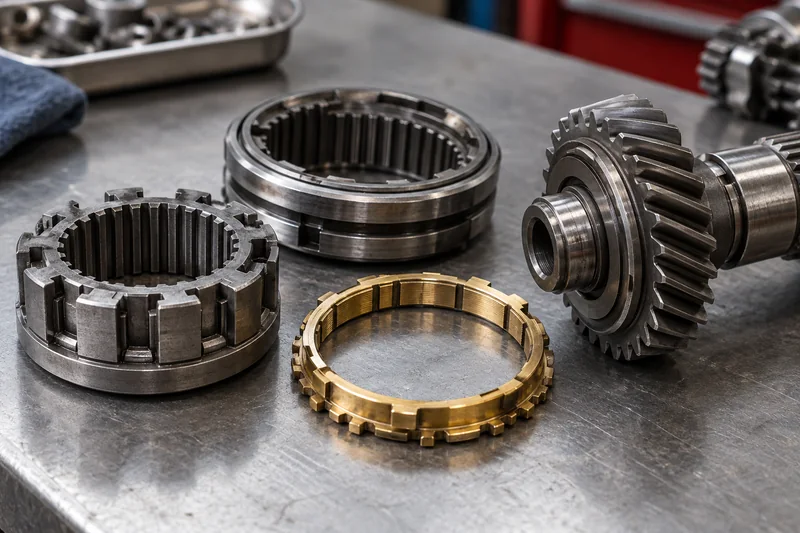
Inside a manual gearbox, the selected gear and the shaft may be turning at different speeds. A synchronizer assembly uses friction to bring the relevant components closer to the same speed before the sliding sleeve engages. A ring, hub and sleeve are among the parts involved, although designs differ between gearboxes. When friction surfaces or engagement teeth wear, a shift may become slower or noisy.
This is not the same as saying that every grinding shift needs a new synchronizer ring. The clutch must release properly, the gear selector must move as intended and the lubricant must meet the vehicle manufacturer's specification. A repair aimed at the wrong cause may leave the complaint unchanged.
Which patterns are worth noting?
One gear crunches repeatedly
Does the noise occur when shifting up, down or both? Is it always the same gear? A repeatable fault in one gear is more informative than a general description of “bad shifting.” Avoid forcing the lever through resistance, because further wear of engagement surfaces is possible.
The lever hesitates before engaging
A pause or resistance before a gear can be selected may involve synchronization. It can also be caused by worn linkage bushes, an adjustment issue or clutch drag. Compare how the lever feels with the engine stopped and running, and describe the difference to the workshop. That observation is only one clue, not a home test that proves the failed part.
Behaviour changes when cold
If shifts are noticeably different immediately after starting, the gearbox oil specification and level deserve checking. An oil leak is a separate problem that should be located. Changing oil can correct a lubrication issue, but it cannot rebuild a worn friction surface or damaged engagement teeth.
How should a manual gearbox be assessed?
Start with the vehicle model, year, mileage and, if available, gearbox code. Record which gear is affected, when the complaint began and whether earlier clutch or gearbox work was done. A technician can then check clutch release, shift linkage, visible leaks and the relevant oil specification. A controlled road test may reproduce the complaint when safe.
These external checks help decide whether internal inspection is justified. If dismantling is needed, the synchronizer ring should not be viewed in isolation. The sleeve, hub, gear dog teeth, bearings and adjacent surfaces may also need inspection. A targeted repair may be sufficient in some cases; in others, wear extends farther. The inspection findings should determine the proposed scope.
Is continued driving a good idea?
Repeated crunching is not a reason to push harder on the lever. If a gear will not engage, jumps out, or the noise becomes severe, the vehicle may be unsafe to use. Stop in a safe place and seek professional advice; transporting the car may be more sensible than continuing to drive. A symptom guide cannot replace hands-on assessment.
What affects the repair estimate?
The gearbox design, affected gear set, parts availability, extent of damage and removal and refitting labour all affect cost. A noisy shift does not automatically call for a complete rebuild, but a single ring replacement is not always enough either. Ask for the findings, proposed parts and labour scope before accepting a quote. An accurate fixed price cannot be inferred from a brief online description alone.
Frequently asked questions
Does grinding in one gear prove synchronizer failure?
No. It raises the possibility, but clutch release, linkage and lubrication must also be considered.
Can fresh oil repair a worn synchronizer?
No. Correct oil may address a lubrication problem; it does not restore worn metal or friction surfaces.
Why is shifting easier with the engine off?
That difference may point toward incomplete clutch disengagement, among other causes. It does not identify a failed part by itself.
Will all gears be affected?
Not necessarily. The pattern depends on gearbox design and the actual fault. Difficulty in every gear makes external causes especially important to check.
Should I keep trying to force a reluctant gear?
No. Repeated force can add damage. Arrange an inspection if the symptom recurs.
Must the gearbox be removed to diagnose the problem?
External checks come first. Confirming the condition of internal parts may require removal and dismantling.