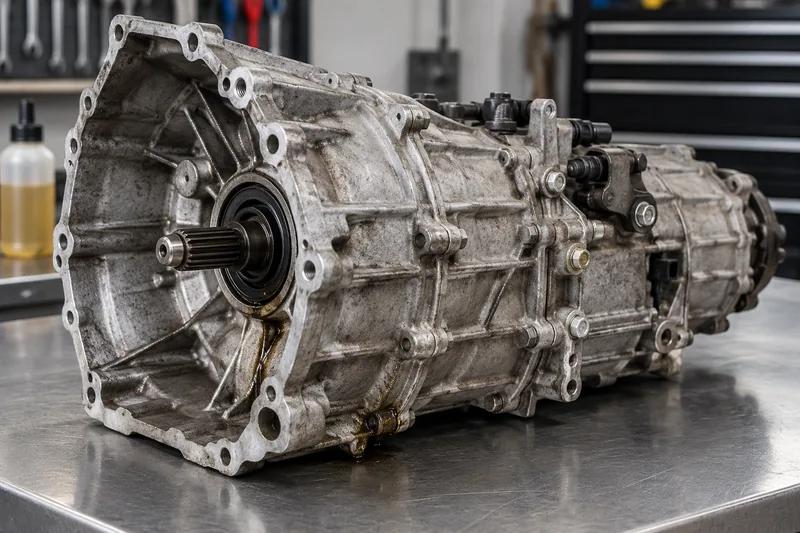
Manual Gearbox Oil Leaks: What Drivers Should Know
Manual Gearbox Oil Leaks: What Drivers Should Know
An oily patch under a parked car is a reason to investigate, but it is not a diagnosis. Fluid can run along the gearbox casing, undertray or another surface before reaching the ground. The place where it drips may be some distance from the original leak. Engine oil and other vehicle fluids can also leave marks near the transmission.
For drivers looking for Manual Gearbox Repair Antalya, the useful first step is to establish which system is leaking and whether the manual gearbox still has the correct oil level. A small seal repair and a gearbox rebuild are very different jobs. Neither should be assumed from a photograph or a stain alone.
What signs might point to a gearbox leak?
Repeated oil marks after parking, fresh wetness on the housing or oily dirt around a joint can justify an inspection. A previously cleaned area that becomes wet again may help distinguish an active leak from residue left during maintenance. However, the lowest or dirtiest area is not necessarily where the problem begins.
A gearbox with insufficient lubricant may develop a change in noise or shift quality. These symptoms have several other possible causes, including clutch release issues and wear in the selection mechanism or internal components. A quiet gearbox is not proof that its lubricant level is satisfactory. Waiting for a whine or grinding noise can delay a necessary check.
Drivers should describe what they can observe rather than name a failed part. For example, “a new oil patch appeared after each overnight stop” gives the technician more reliable information than “the input seal has failed” when no inspection has taken place.
Common areas a technician may inspect
Shaft and driveshaft seals
Depending on the gearbox layout, sealing points may be found around the input shaft, output shaft or driveshaft connections. Seal ageing, damage during installation and the condition of the running surface are among the possibilities to investigate. Where a leak returns after seal replacement, the supporting components and shaft condition may also need attention.
Housing joints, covers and plugs
Leaks can appear at case joints, covers or the fill and drain plugs. The sealing arrangement, surface condition and previous maintenance work are relevant. Tightening a plug further is not a universal remedy and can damage threads or the housing. Any adjustment should follow the service information for that gearbox.
Venting and filling conditions
The inspection may include the breather and the lubricant level. Filling conditions or a venting problem can affect the investigation. Damage to the housing is another possibility, particularly after an impact or earlier repair, but a crack should not be assumed simply because the casing is oily.
How the inspection should progress
The gearbox type must first be identified. The technician then traces the fluid, checks the oil level under the specified conditions and examines the likely leak areas. Cleaning the affected area appropriately and checking where new wetness appears can be useful. A leak that becomes apparent only when the unit is warm may require a different inspection approach from one visible while parked.
The exact procedure varies between vehicles. A fill quantity or level-check method from another model should not be applied without checking compatibility. The gearbox code and manufacturer service information matter more than a generic description such as “five-speed manual.”
Before the appointment, note the vehicle model, mileage, when the leak first appeared and whether recent gearbox work or a fluid change preceded it. A photograph can support an initial discussion. It cannot show the actual lubricant level or rule out hidden damage.
Can you keep driving with a leak?
There is no safe distance that applies to every manual gearbox leak. Continuous dripping, a rapidly growing patch, a new pronounced noise or a serious change in gear operation should prompt professional advice before further driving. Stop in a safe place when necessary and arrange suitable vehicle recovery if continued operation is uncertain.
Do not crawl under a running car or a vehicle supported only by a jack. Checking for repeated marks from a safe parked position is different from attempting an underbody repair. Hot components and insufficient support create hazards that are unrelated to the size of the visible leak.
Topping up may be needed to restore the correct level, but it does not repair the cause. The lubricant must meet the specification for the vehicle and gearbox. Manual transmissions do not all use the same oil type. Unverified additives or stop-leak products should not replace diagnosis and the necessary mechanical work.
What affects the repair bill in Antalya?
Access is a major factor. A sealing point that can be reached externally may require a different amount of labour from one that requires gearbox removal. The required seal, lubricant and sealing materials also vary. Damage to a running surface or internal wear associated with lubricant loss can expand the job.
A reliable estimate therefore follows inspection rather than a generic online price. When discussing Manual Transmission Repair Antalya, ask which parts and operations are included, whether the oil is included, and how any additional findings will be communicated. If you are visiting Antalya, explain your travel plans without expecting a guaranteed completion time before the problem is known.
Frequently asked questions
Can I identify gearbox oil by its colour?
Colour alone is unreliable. Lubricant formulation, age and contamination can change its appearance. The source should be traced and the specification checked.
Does every leak require a rebuild?
No. Some leaks involve a sealing point without confirmed internal damage. A rebuild should be considered only when the inspection supports that level of work.
Will replacing the seal always solve it?
Not necessarily. The seal may be the leak source, but a damaged running surface or another contributing condition can cause the problem to return.
Is a slight oily film different from dripping?
Yes, they are different observations. Neither tells you the remaining oil level. The extent and progression of the leak still need assessment.
Can a leak cause difficult gear changes?
Low or unsuitable lubricant can affect operation, but difficult shifts have other possible causes. A symptom alone cannot establish that the leak caused the shifting problem.
Is oil between the engine and gearbox always from the gearbox?
No. More than one source can affect that area. The position of the stain is a starting clue, not confirmation of a failed input shaft seal.