Why Is My Manual Gearbox Hard to Shift?
Why Is a Manual Gearbox Hard to Shift?
A gear lever that suddenly feels stiff does not automatically mean the gearbox needs rebuilding. In a manual car, the cause may lie in clutch release, external shift cables, lubricant condition or a synchronizer inside the unit. If you are looking into manual gearbox repair in Antalya, describing exactly when the problem occurs is more useful than guessing at a part. A workshop must inspect the vehicle before identifying the cause.
Start with the pattern, not a diagnosis
Can you select gears easily with the engine off but struggle when it is running? That pattern can point toward a clutch that is not disengaging fully. Is the lever stiff even with the engine stopped? Cables, bushings and the selector mechanism deserve attention. Does only one gear resist engagement or grind? A gear-specific synchronizer issue becomes more plausible, although it is not proven. Does the problem improve as the gearbox warms? Check the specified oil and its level. These comparisons guide inspection; none is a stand-alone test.
Common causes of difficult manual shifts
Incomplete clutch disengagement
When the clutch does not separate the engine from the gearbox adequately, the input shaft may still be driven as the driver attempts to select a gear. First and reverse can then be difficult, and reverse may make a grinding sound. Depending on the vehicle, the release mechanism, master or slave cylinder, hydraulic fluid and lines, cable adjustment and clutch assembly may need inspection. A poor shift does not by itself justify opening the gearbox.
Shift linkage, cables and bushings
Many manual cars use external cables or rods to carry lever movement to the gearbox selector. Wear, poor adjustment, a damaged bushing or resistance in a cable can make the shift gate vague or heavy. If the lever remains difficult to move with the engine off, this external system is a sensible early check. The layout varies by model, so adjustments should follow the vehicle maker's procedure rather than a universal setting.
Incorrect, low or contaminated oil
Manual transmission lubricant protects bearings and gears and affects the friction behavior on which synchronizers rely. A low level, contamination or an oil outside the manufacturer's specification can change shift feel, especially when cold. The correct response is to identify any leak, confirm the level using the specified method and check the required lubricant grade. Filling with a thicker oil simply to mask the symptom can create a new problem and is not a diagnosis.
Synchronizer and selector wear
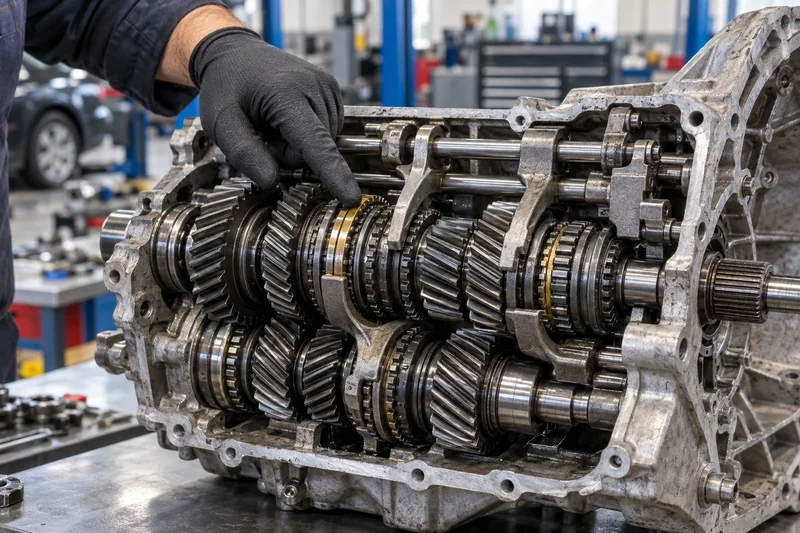
Synchronizers help match rotating speeds before a gear engages. Repeated grinding or resistance in one particular gear can prompt inspection of its synchronizer ring, hub, sleeve and selector fork. Yet clutch drag can produce similar complaints. A competent diagnosis checks the external controls and clutch before deciding that internal parts must be replaced. If dismantling is needed, the condition of adjacent parts matters too.
Why cold shifts may feel different
Gear oil is more viscous at lower temperatures, so some difference in lever feel just after a cold start can occur. Persistent resistance, grinding or a worsening complaint should not be dismissed as normal. The workshop should verify that the oil meets the vehicle's specification and examine the shift controls. Even in Antalya, morning conditions can differ from a fully warmed drive; tell the technician which situation reproduces the symptom.
What to observe without taking anything apart
Note whether the issue affects all gears or only one, whether it occurs with the engine off, and whether reverse grinds. Record any change in clutch pedal feel, visible leak under the car, and whether the problem is worse cold or after a longer drive. Do not force the lever or experiment on a busy road. These observations help a technician reproduce the fault; they do not replace inspection.
When should you stop driving?
If you cannot select a gear, hear loud metal-on-metal grinding, notice a sudden loss of clutch pedal resistance or find a significant oil leak, stop in a safe place and seek professional help. Forcing an engagement may damage the selector or synchronizer components. Even a mild symptom should be checked if it progresses, since the appropriate repair depends on finding the actual fault rather than compensating for it with more force.
A sensible inspection sequence in Antalya
A technician can first confirm the reported conditions, then assess clutch release and the external shift mechanism. Visible leaks, oil level and lubricant specification come next where the design allows. A controlled road test can establish which gears are affected and when. Only if evidence indicates an internal issue should gearbox removal and component measurement be considered. This article explains the symptom; a manual gearbox repair service assessment should determine the work required for an individual car.
Frequently asked questions
Does a stiff gear lever prove the synchronizers are worn?
No. Clutch drag, linkage faults and unsuitable oil can cause similar symptoms. The possibilities should be separated through inspection.
Why is reverse particularly hard to engage?
Reverse arrangements differ between gearboxes, and incomplete clutch release can make reverse noisy or difficult. Repeated difficulty warrants investigation.
Can forcing the lever make it worse?
Yes. Extra force can accelerate wear in selector and synchronizer parts. If a gear will not engage normally, have the cause checked.
Will changing the oil always fix hard shifting?
No. Correct oil may help when lubricant condition or specification is the cause, but it will not repair a clutch or worn mechanical part.
What if only second gear is difficult?
The second-gear synchronizer and selector deserve attention, but clutch release, linkage and oil should still be ruled out first.
Can the repair price be quoted from the symptom?
Not reliably. The gearbox model, confirmed fault, parts and labor required determine the scope and cost.