How Can You Recognise Gear Wear in a Manual Gearbox?
How Can You Recognise Gear Wear in a Manual Gearbox?
Gear teeth in a manual transmission carry repeated loads, and their working surfaces can eventually wear or become damaged. Yet a whine heard inside the car does not prove that a gear is failing. Bearings, the final drive, clutch-related parts and even road noise can be mistaken for gearbox gear noise. If you are considering manual gearbox repair in Antalya, the most useful first step is to record when the sound occurs. A firm conclusion requires appropriate checks and, where necessary, inspection of the dismantled parts.
Normal contact marks versus damage
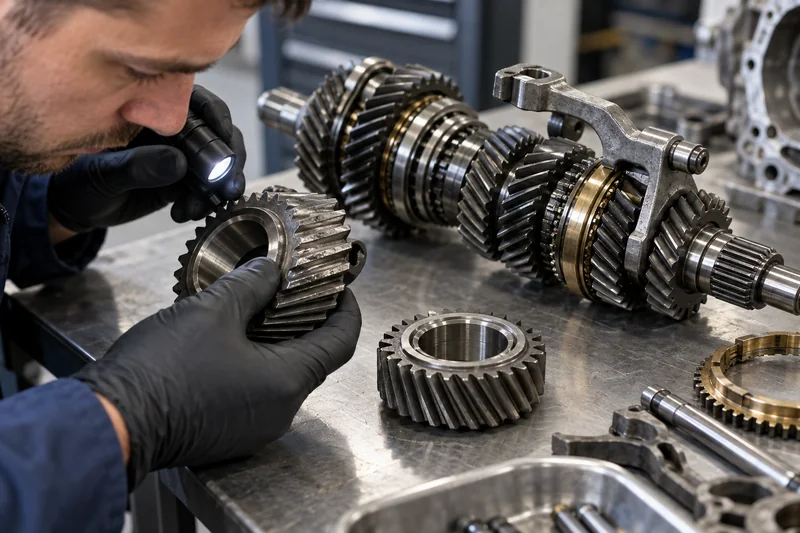
A polished contact pattern on a used gear is not by itself a reason to replace it. Pitting, scuffing, loss of tooth profile or a chipped edge may be more significant. The mechanic must judge severity, location and whether the mating gear is also affected. Shaft support and bearing clearance influence how the gears mesh. Looking at one tooth in isolation can miss the underlying cause.
Possible signs a driver may notice
Noise associated with a particular gear
A whine, rumble or repetitive ticking that becomes more obvious under load in one selected gear may justify examination of that gear pair. Make a note of whether the noise appears on acceleration, overrun or steady driving. The same sound can originate elsewhere, so this pattern guides diagnosis rather than confirming gear wear. General gearbox whine and bearing noise are related but separate questions.
Vibration that changes with load
Damaged gear teeth can contribute to vibration. However, engine mounts, drive shafts and wheels can produce sensations that appear to come from the transmission. Whether the vibration follows vehicle speed, engine speed or a particular gear provides useful context. Do not perform risky road experiments to investigate it; a workshop can reproduce the symptom in controlled conditions.
Metal debris in the oil
Small traces of fine metal and large chips are not equivalent findings. Larger fragments or an unexpected build-up of debris call for closer examination of internal components. Debris may come from gears, bearings or synchronizer parts. Oil appearance alone cannot identify the exact failed part or justify a full rebuild. The condition and quantity should be documented during inspection.
Shifting problems alongside the noise
Grinding, stiff gear changes or a gear disengaging unexpectedly may occur with internal damage, but none proves that a gear tooth is worn. Clutch drag, shift linkage problems and synchronizer wear have their own signs. Those possibilities must be checked before the gearbox is opened or a replacement part is ordered.
What can damage a gear tooth?
Inadequate lubrication can weaken the protective film between meshing teeth. Hard particles in the lubricant can scratch or indent the contact surfaces. Overloading, misalignment and poor shaft support can change the contact pattern and concentrate load. Surface fatigue may develop over many cycles. In a particular vehicle, the cause has to be established through the oil condition, leak check, bearing condition and observed tooth pattern, not assumed from mileage alone.
How a workshop can investigate
Describe the affected gear, speed range, noise character and whether it changes when you accelerate or lift off. An appropriate road test and external inspection can then help rule out other sources. Oil level and leaks should be checked using the vehicle maker's procedure. If evidence points to an internal fault, the gearbox can be dismantled to inspect both mating gears, shafts, bearings and selector components. Measurements and parts availability should inform the repair decision. Neither an oil change nor a complete rebuild should be promised before the evidence is gathered.
Repairing or replacing damaged parts
The appropriate repair depends on the extent and cause of damage. A gear with a seriously damaged working surface or tooth profile may need replacement, sometimes together with its mating component. Any bearing play, misalignment or lubrication fault also needs attention; otherwise a new part can be damaged again. The gearbox model and available parts determine what can be repaired economically. A reliable cost estimate requires a confirmed scope of work, not a guess based on noise.
When should you stop driving?
If the noise becomes rapidly louder, a heavy metallic knock develops, a gear cannot be selected safely or a substantial oil leak appears, stop in a safe place and seek professional assistance. Continuing to drive can spread damage to nearby components and increase the chance of becoming stranded. Even a less dramatic change deserves inspection if it persists or worsens.
Questions to ask in Antalya
Ask how the suspected gear damage will be verified, which external sources of noise have been ruled out and whether any proposed internal replacement addresses the cause as well as the damaged part. This guide focuses on the diagnostic question; a manual transmission repair assessment for your vehicle should explain the actual findings before work is agreed.
Frequently asked questions
Does a gearbox whine prove the gears are worn?
No. Bearings and other driveline parts can make similar sounds. The operating conditions and inspection findings matter.
What if the noise appears in only one gear?
That gear pair may need examination, but selector and bearing conditions should also be considered. One symptom is not a definitive diagnosis.
Is metal in gearbox oil always serious?
Quantity, particle size and type matter. Larger fragments or increasing debris warrant investigation, but inspection identifies the source.
Can thicker oil solve gear noise?
Changing viscosity may alter a sound without repairing the cause and may violate the vehicle specification. Use the specified lubricant.
Can gear wear be confirmed without opening the gearbox?
External checks can build a strong suspicion; the tooth surface and full extent of damage often require internal inspection.
What determines repair cost?
The gearbox design, confirmed damage, condition of paired parts, parts supply and labor all affect the quote.